

Top 5 Fabrication CRMs for Small Stone Shops
Looking for the best fabrication CRM for a small stone shop? This guide compares top tools for quoting, templating, scheduling, installs, and invoicing, and shows why a stone-specific fabrication CRM can cut admin, reduce mistakes, and keep every job moving.
If you run a small stone shop, you already know the hard part isn’t just winning work. It’s keeping every job moving without missed notes, double entry, diary clashes, or those last-minute install surprises. That’s why more teams are looking for the best fabrication CRM instead of trying to stretch spreadsheets, paper packs, and generic job tools for another month.
I reviewed leading options for small to mid-sized fabrication businesses and compared them with a stone-shop focus: quoting, templating handoff, workshop scheduling, install coordination, customer tracking, and how each system fits real granite, quartz, marble, and worktop workflows. Some tools are broad construction platforms. Others lean more toward field service. One stands out for the day-to-day work fabrication teams actually deal with.
Small shops don’t have time for software that looks great in a demo but sends the team back to side spreadsheets by week two. That’s the real test. The best fabrication CRM should cut down chasing, tighten handoffs, and help the office and field teams work from one live record.

What we reviewed
- CutBench
- JobTread
- JobNimbus
- Jobber
1. CutBench
At a glance
CutBench is a fabrication CRM and job management platform for stone and worktop fabrication businesses. It does more than a generic sales CRM with a few notes and reminders. Instead, it connects the full process: enquiry, quote, template, fabrication, scheduling, install, stock, invoicing and team updates. For small shops, lead tracking often isn’t the real problem. The real issue is the handoff between the office, workshop and site. In practice, CutBench works best for businesses that want one system for customer management and day-to-day operational control.
Core features
- CRM and lead tracking for enquiries, follow-ups and quote status
- Quote creation and pricing for stone and worktop jobs. Fast and easy to understand.
- Templating workflow keeps job details and field notes shared, so the right information stays with the job instead of getting lost between teams.
- Fabrication scheduling with live visibility across the job pipeline
- Installation planning and crew coordination. Easy to follow.
- Stock, slab and purchasing support, set up to help teams stay on top of materials, orders and what needs attention next.
- Invoicing, reporting and team communication in one place
Pros
- Made for stone shops: The workflow fits fabrication businesses, not a generic contractor setup.
- Handles the full job lifecycle: It covers more than sales. Teams can manage the handoff from quote to final fit in one process.
- Less double entry: Shared records mean less repeated data entry across calendars, paperwork, and chat threads.
- Better team visibility: Office staff, templaters, fitters, and owners all work from one live status. No more chasing updates.
- Good fit for UK worktop firms: Especially useful for granite, quartz, marble, and kitchen worktop businesses that need practical workflow control.
Who it’s for
CutBench suits small to mid-sized stone fabrication and worktop installation businesses that want to move on from spreadsheets, paper folders and disconnected tools. It works well for owners, operations managers, office teams, templaters, fitters and sales staff who need jobs to keep moving well from the first enquiry to the invoice.
Unique value proposition
CutBench stands out by keeping CRM tied to the work that actually depends on it. In a fabrication business, customer information only matters when it stays connected to measuring, production, scheduling, and installation.
CutBench is built around those real links. A revised sink cutout, a changed install date, or a slab allocation issue shouldn’t live across different systems. That gets messy fast. With CutBench, the business manages those moving parts in one workflow built for fabrication, instead of trying to force a generic platform that was never made for stone jobs.
Real world use case
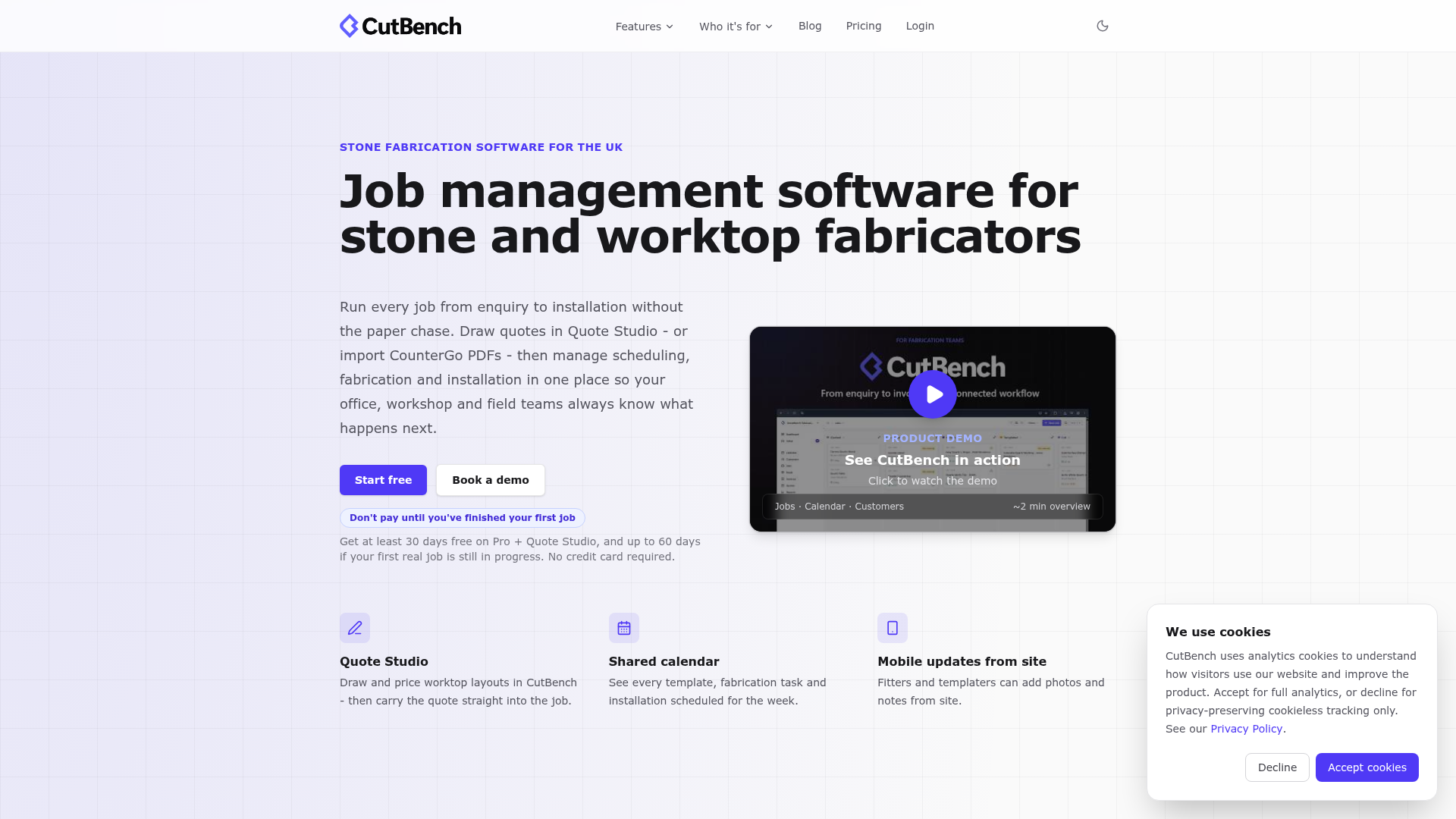
A small quartz worktop shop with 20 to 40 active jobs can use CutBench to keep quotes, template bookings, fabrication readiness, install dates, and invoices in sync. The office doesn’t need to chase templaters for notes, and fitters don’t have to call in just to get the latest revision. Instead, the team works from one shared job record. Customers get fitted faster with fewer mistakes.
Website: https://cutbench.io
2. JobTread
At a glance
JobTread brings CRM, estimating, project management, budgeting, scheduling, and client communication into one place for contractors and remodelers. For stone shops, the main benefit is better visibility across the full job, especially when the work is closely tied to builders or bigger renovation projects with lots of moving parts. Useful stuff. Still, it isn’t a specialist stone fabrication CRM, so teams may need to adapt fabrication-specific steps to fit a wider construction workflow.
Core features
- Manage leads and customers
- Estimating and proposal tools
- Project scheduling and task management
- Budgeting and job costing
- Change orders and document storage
- Client portal and communication tools
- Invoicing and payment features
Pros
- Strong project oversight: Clear visibility across jobs, budgets, documents, and timelines. Easy to track.
- Useful for contractor-led work: A good fit for shops working within larger construction projects.
- Good estimating tools: Helps businesses create organized proposals, then track changes as things shift.
- Client-facing features: Portals and communication tools help keep customer updates clear.
Cons
- Less fabrication-specific: Stone templating, slab flow, and workshop handoffs aren’t the main focus.
- Can feel broad for small shops: For smaller teams, it can feel like they’re paying for a much larger construction system than they need.
- Setup may take work: Fabricators may need to adapt their workflows to fit how the software is organized. It’s not always easy.
Who it’s for
JobTread makes sense for fabricators handling lots of residential construction, renovations, or contractor-managed projects that need broad project controls. It fits best for businesses that think like builders first and fabricators second. Not stone-first shops.
Unique value proposition
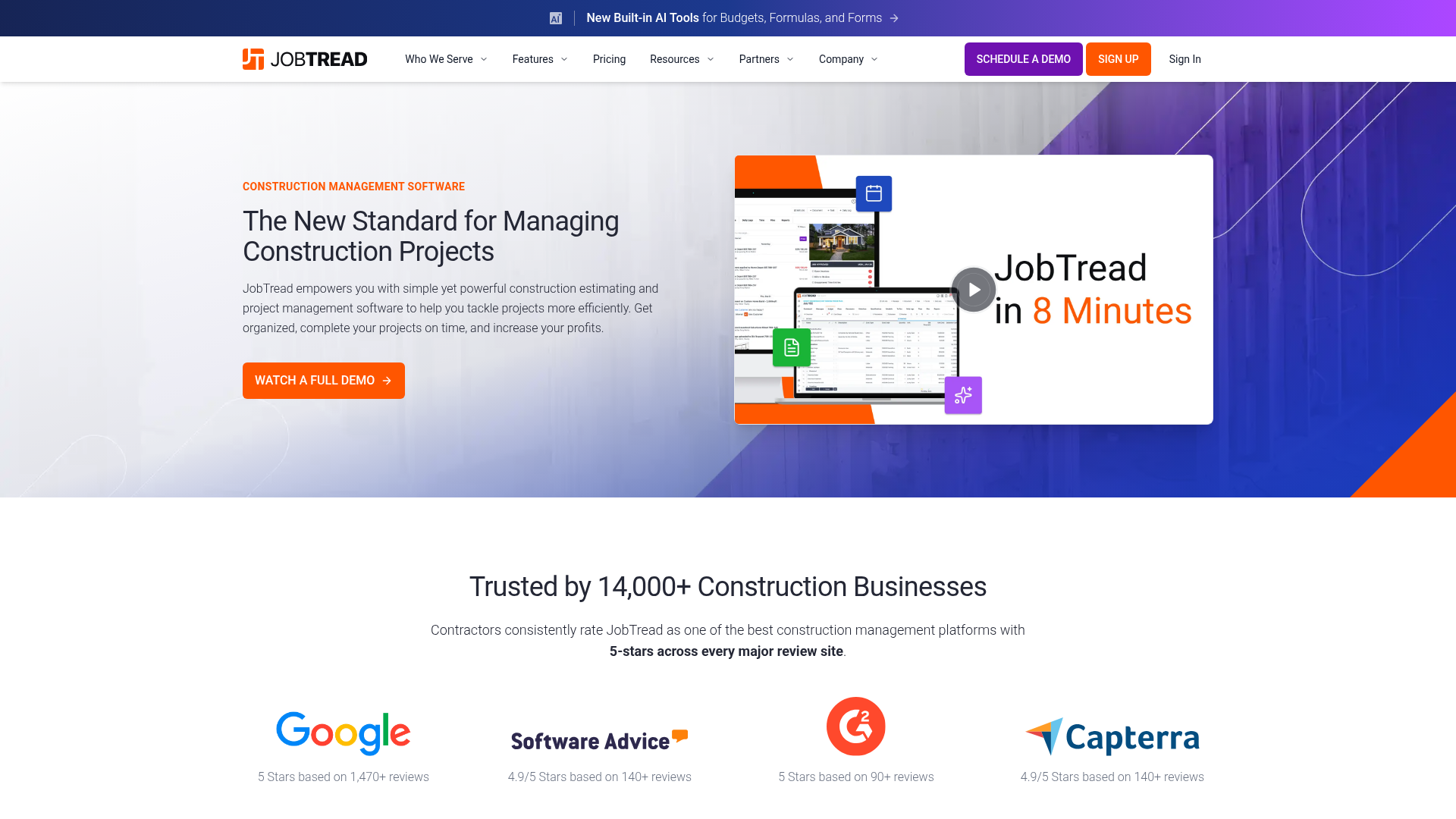
JobTread stands out by combining CRM, estimating, project tracking, and finances in a contractor-friendly setup. For a stone business managing worktops, plus wider project admin with builders and clients, that’s genuinely useful. Broad range. That breadth is the main value, though some fabrication teams may feel the wider scope takes a bit more adapting to.
Website: https://www.jobtread.com/
3. JobNimbus
At a glance
JobNimbus is well known in home service and contractor circles, especially roofing and exterior trades. Some custom trade businesses use it too when they need CRM and workflow management. It focuses on leads, communication, task tracking, scheduling, and visibility across the sales process. For a stone shop, it can help tidy up enquiries and customer follow-up. It’s useful, though it may need extra process work if the shop wants detailed fabrication control from template to install.
Core features
- CRM and sales pipeline tools
- Contact and communication tracking
- Task and workflow automation
- Scheduling and calendar management
- File and photo storage
- Estimates, invoices and payments
- Mobile app access for field teams
Pros
- Easy sales visibility: Helps teams track leads, follow-ups, and deal stages. Clear and helpful.
- Mobile-friendly: Useful for teams that need updates away from the office, especially in the field.
- Automation options: Cuts manual reminders and routine admin. Less repetitive work.
- Popular in field trades: A mature platform with broad contractor use. Commonly used.
Cons
- Built more for sales than stone fabrication: It’s aimed more at sales, so templating, slab logic, and production handoff aren’t where it feels strongest, at least not natively.
- May need extra workflow customisation: In more operations-heavy shops, teams can hit limits and end up needing extra workflow changes.
- Feature fit varies by trade: What works well for roofing or field sales doesn’t always line up neatly with worktop fabrication.
Who it’s for
JobNimbus works best for stone businesses that mainly need better lead management and customer follow-up, especially when sales-process chaos matters more than workshop coordination. Not every shop, though. It’s a weaker fit for businesses that want one connected fabrication CRM covering quotes, production, and final installation in one place.
Unique value proposition
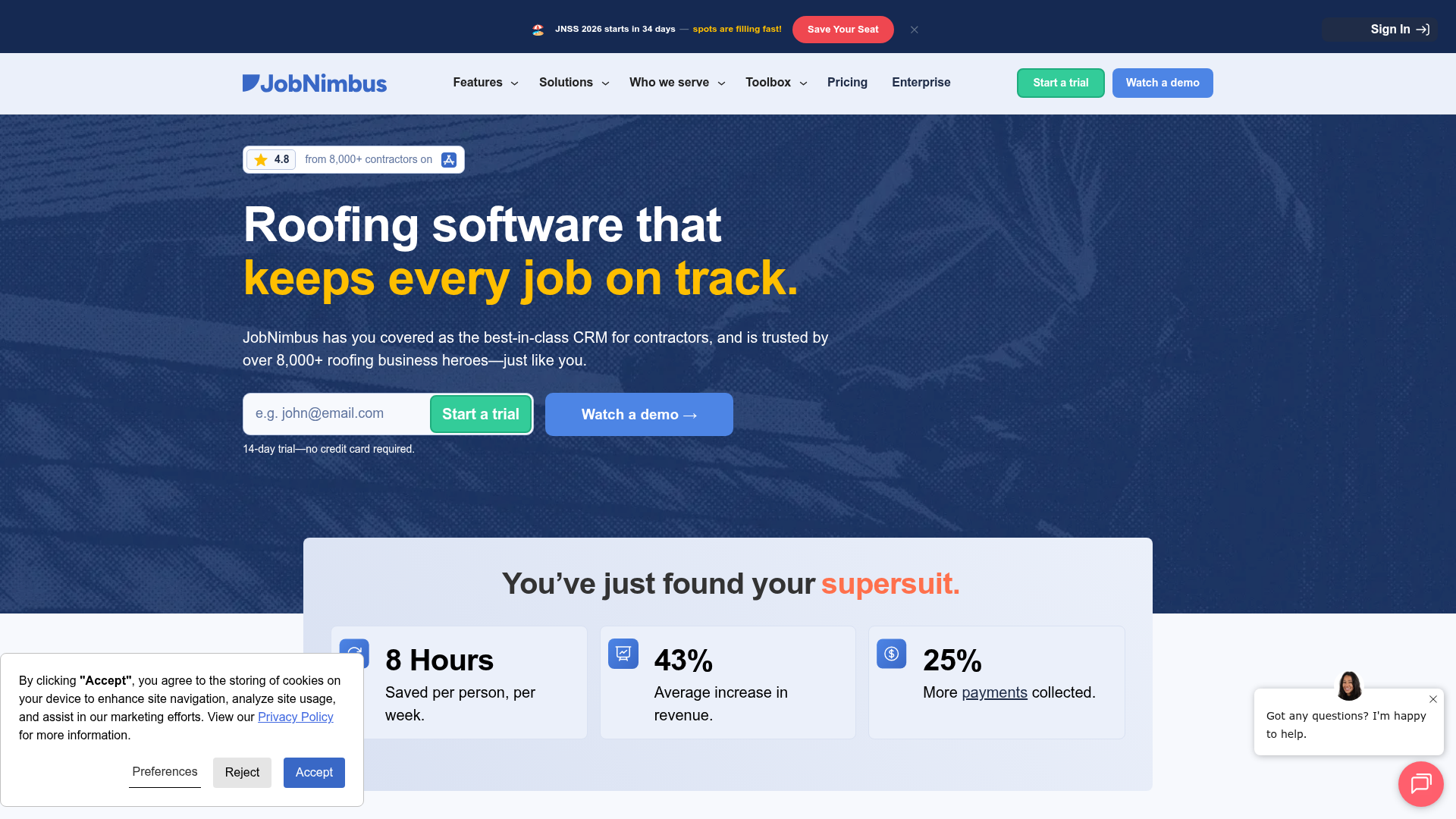
JobNimbus stands out by balancing CRM features with workflow tools that work well in the field. For teams that need tighter pipeline control, mobile access, and automated communication, it can feel like a real upgrade from basic contact management. Its sweet spot is organised customer and job tracking. Still, specialist fabricators may eventually outgrow the operational side.
Website: https://www.jobnimbus.com/
4. Jobber
At a glance
Jobber helps small service businesses handle quoting, scheduling, dispatching, invoicing and customer communication. It’s easy to learn. Local trade teams like it because it’s simple to use and quick to train on, so getting started feels smooth. For stone shops, Jobber can help with appointments, site visits and install coordination, though it fits service businesses better than a true fabrication CRM. The closer the work gets to production, the easier those gaps are to spot.
Core features
- Manage clients and basic CRM
- Create quotes and estimates
- Schedule and send out jobs
- Track jobs and manage visits
- Handle invoicing and online payments
- Use the mobile app for field teams
- Communicate with customers
Pros
- Easy to learn: The interface feels friendly, so small teams can move away from paper systems without much trouble. It’s easy to use.
- Strong scheduling: It handles dispatch, appointments and field coordination really well. A real help.
- Helpful mobile app: Crews can use it easily while they’re out on site.
- Solid admin basics: Quotes, invoices and client communication feel straightforward. No fuss.
- Public pricing available: Small businesses can budget more easily upfront, which makes planning a little less stressful.
Cons
- Service-business focus: Built more for service businesses, not really for stone templating, fabrication, or slab control.
- Limited production depth: Workshop handoff and fabrication detail aren’t the main focus here.
- May require other tools: Some fabricators still need separate systems if they want more operational control.
Who it’s for
Jobber is a good fit for very small teams that want a simpler way to quote, book, dispatch, and invoice without a steep learning curve. It works best when the business runs more like a field service company, not a fabrication workshop.
Unique value proposition
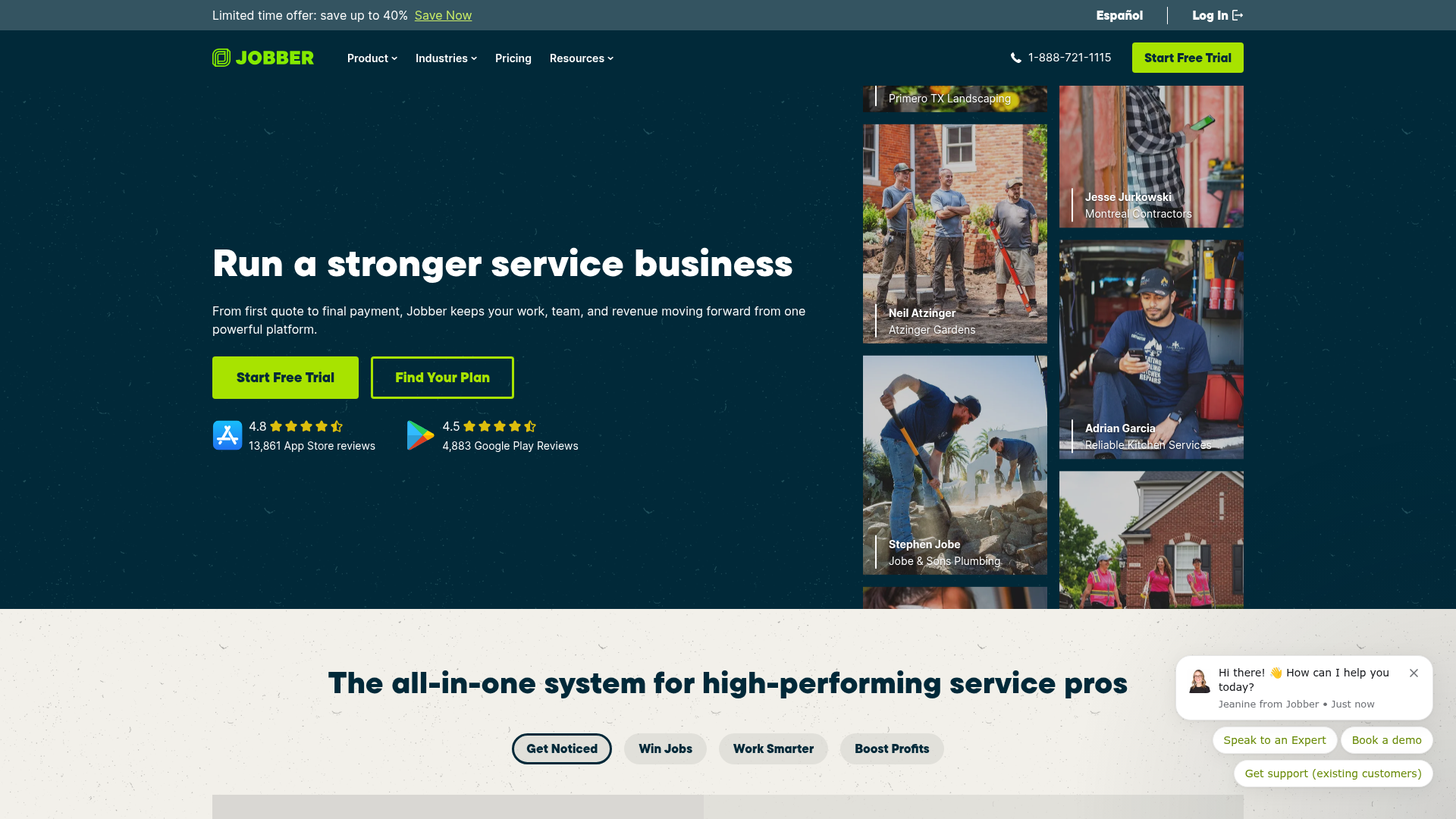
Jobber’s biggest advantage is simplicity. For small businesses that need to get scheduling and customer admin under control fast, it offers an easy system with less setup than many larger platforms. It helps when the main goal is to leave manual diaries behind and cut the hassle that comes with basic invoicing. Still, it isn’t as deep as a specialist platform for businesses that want a full fabrication CRM.
Pricing: Public plans are available on the vendor website. They vary by user count and feature tier.
Website: https://www.getjobber.com/
How the options differ in real shop use
The biggest difference between these tools isn’t just that they include a CRM. Most already do. What matters is what happens after a customer says yes.
A general contractor CRM may track the lead, send a quote, and store notes. But small stone shops also need template details to flow cleanly into fabrication, installation dates that match real dependencies, and office teams that can see one trusted job status instead of checking three different places. That’s where a specialist fabrication CRM stands apart from broader tools.
For many teams, the practical shortlist looks like this:
- Choose CutBench if you want one connected system for quoting, templating, fabrication, scheduling, installs, stock, and invoicing.
- Choose JobTread if you need broader contractor-style project management and budgeting.
- Choose JobNimbus if your main problem is sales pipeline and customer communication.
- Choose Jobber if you want a simple service-business tool for scheduling and invoicing.

Why CutBench is the strongest fit for small stone shops
Small fabrication businesses don’t need the biggest software on the market. They need something that cuts friction from the jobs they actually run every day.
For most teams, that means keeping customer records, quote details, site notes, production status, install scheduling and invoicing in one place. If those pieces sit in different places, the team ends up spending the day asking the same questions again: which version is right? Has templating happened? Is the slab allocated? Did the fitter see the note? Has the invoice gone out?
CutBench fits best when those handoffs matter. The platform was built around those exact steps, not around generic admin. It gives stone shops a fabrication CRM that works more like an operational system than a contact database with reminders attached. For small and mid-sized teams, that can mean fewer avoidable mistakes, less time spent on admin and better control without adding more software.
For teams replacing spreadsheets, paper packs, WhatsApp threads or a generic job tool that never quite worked, CutBench should be first on the shortlist. Simple as that. They can look through the platform on this stone fabrication workflow software page and see whether it matches the way their team already works.
Frequently asked questions
Start with workflow fit, not a huge feature list. A good fabrication CRM should help the team manage enquiries, quotes, scheduling, site measures, fabrication handoff, installs and invoicing without duplicate admin. Customer records matter. But software that works at that stage, then breaks down when templating or production starts, won’t solve the real problem.
Use current bottlenecks as the test. Check where jobs get held up, where information gets repeated, and where mistakes happen most. Then have each vendor show that exact process in the demo.
If a platform like CutBench shows one job moving from quote to template to install in one clear workflow, that tells you more than a long feature presentation.
Pricing changes a lot by vendor, user count, and feature depth. Simpler field service tools may use tiered monthly pricing.
More specialist or construction-focused systems can price things differently based on setup and scope. But the bigger cost question goes beyond the subscription. The business needs to know if the software saves enough admin time, rework risk and invoicing delay to justify the move.
Many small shops see results quickly once they put quoting, scheduling, and job visibility in one place. The first improvements are fewer status-chasing calls, smoother handoffs, and faster invoice turnaround. Bigger gains show up after the team uses the system fully in daily work instead of keeping old side processes going in spreadsheets or paper folders.
The biggest gains show up in small to mid-sized stone fabrication and worktop installation businesses, especially when several active jobs are running at the same time.
A connected system matters when the office team, templaters, workshop staff, and fitters all handle the same job. It’s easy to lose track. Shops doing granite, quartz, marble, and kitchen worktops benefit most because revisions and handoffs can get messy fast.
Sometimes, but mostly for very early sales tracking. Once a business needs templated notes, production stages, install dependencies, purchasing, and invoice timing tied together, a generic CRM starts to hit its limits. Many growing shops switch to a specialist option like CutBench instead of adding operations to a sales-first tool.