

Stone Fabrication Digital Transformation Guide
Digital transformation in stone fabrication starts by replacing spreadsheets, paper, and patchwork tools with fabrication shop software that keeps every job in one live workflow. See how stone fabricators can cut errors, speed handoffs, and grow with less chaos.
Digital transformation can sound like a big, vague idea. For plenty of stone fabrication businesses, it can feel like something made for huge factories with deep budgets and full IT teams. For a small to mid-sized worktop company, though, it may begin with simpler problems. A quote sits in one spreadsheet. Templating notes live on a phone. The workshop runs on paper packs. Install changes come through calls or WhatsApp. Then someone in the office has to bring it all together.
That setup might work for a while. As the business grows, jobs get more complex and the cracks start to show in ways the team can’t ignore any longer. Staff retype details. Teams miss dates. Too much time goes into chasing updates. In stone fabrication, digital transformation isn’t about buying flashy tech. It’s about giving the team one clear way to run jobs from enquiry through to install and invoice.
For stone fabricators, digital transformation replaces spreadsheets, paper or generic tools with a clearer way to manage work. Many UK firms are making the move now, but teams still face real hold-ups when they try to change. Rolling out fabrication shop software also needs to happen without causing chaos. If a business still relies on spreadsheets, paper or a generic tool, this guide will help it move to a clearer way of working.
Why stone fabrication digital transformation matters now
Stone fabrication has always involved a lot of detail. Every job can include material choice, slab selection, edge details, cutouts, site access notes, fitting dates, supplier orders and final sign-off. When that information sits in different places, the risk is not just admin waste. It can lead to remakes, delays, messy handoffs and lost margin.
Digital change now affects more than the back office. Across the UK, businesses are already putting serious money into technology. In 2024, UK SMEs planned to invest £60.3 billion in tech. Research also found that 58% planned to use AI, while 44% planned to invest in automation. Even so, many firms still lag behind, leaving a clear gap between interest and action.
| Metric | Value | Year |
|---|---|---|
| UK SME planned tech investment | £60.3bn | 2024 |
| UK SMEs planning to use AI | 58% | 2024 |
| UK SMEs planning automation investment | 44% | 2024 |
| UK businesses with no AI plans | 43% | 2024 |
Many firms know they need better systems, but many still have not made the move. That creates room for stone shops that want to move ahead.
The majority of SMEs are still not using artificial intelligence, despite a growing acceptance by businesses that it will help boost productivity.
For a worktop business, that productivity gain has less to do with AI alone and more to do with building clean, connected workflows first. Good stone fabrication systems cut duplicate entry, give teams clearer handoffs and let each team member work from the same live job record.
What stone fabrication digital transformation looks like in a real stone shop
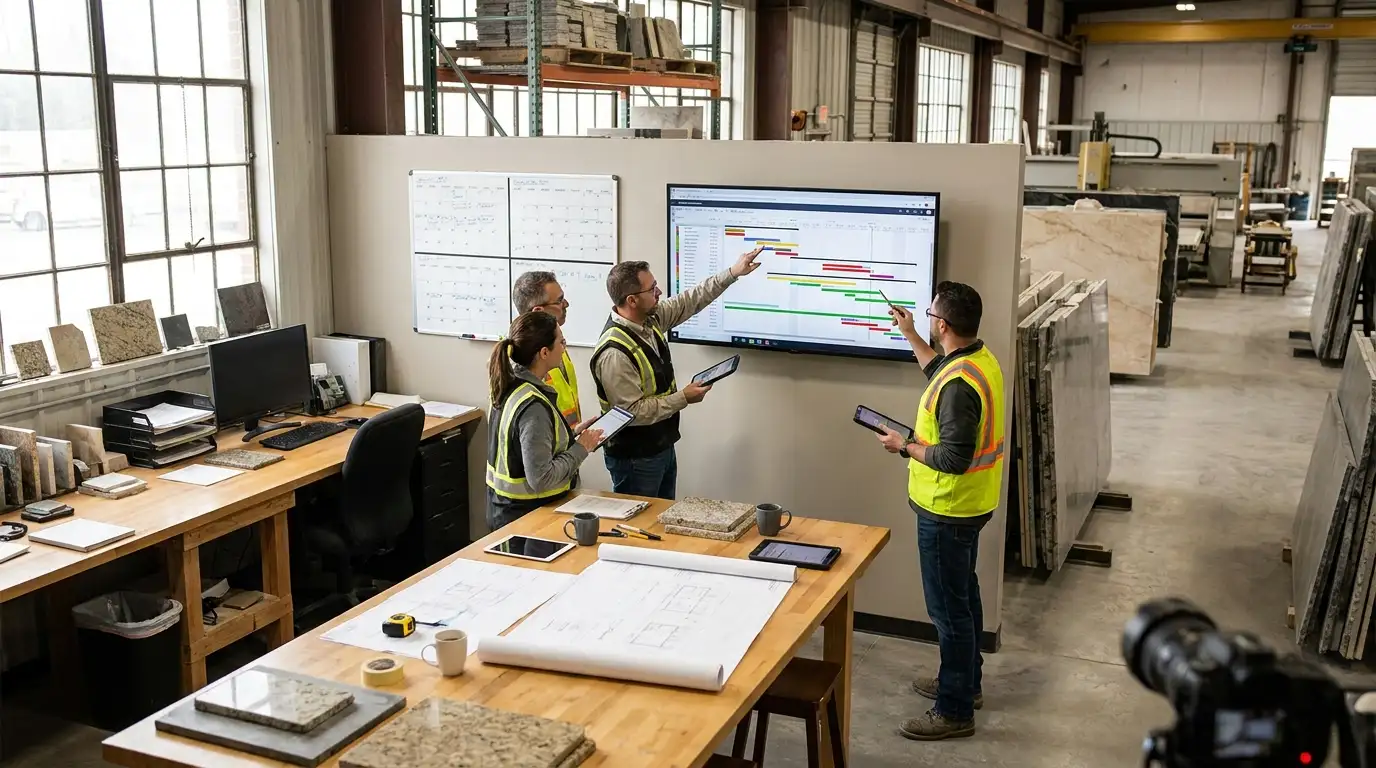
Digital transformation in stone fabrication is about taking friction out of skilled people’s work, not replacing them with software. A templater shouldn’t need to call the office just to check the latest notes. A fitter shouldn’t turn up on site with outdated information. The sales team shouldn’t be stuck searching through email chains either, trying to confirm whether a slab has been allocated.
In practice, the change often means replacing disconnected tools with one shared workflow. That can include quoting, CRM, templating records, fabrication status, scheduling, installation planning, stock control, invoicing and reporting in one place. A purpose-built system matters because stone jobs include details that generic trade software can miss, such as cutouts, edge profiles, splashbacks, slab usage, remnants and install dependencies.
Cloud software matters here too. Across the wider construction sector, 86.3% of professionals were already using cloud-based computing, and 72.3% reported BIM adoption in the 2025 Digital Construction Report. Stone businesses are part of that wider supply chain. Because of that, customers, builders and kitchen partners now expect quicker updates, clearer records and less confusion.
BIM adoption remains strong with a significant majority of construction professionals (72.3%) saying that they have adopted it.
Stone businesses don’t need full BIM workflows to get something useful from that shift. The bigger point is that connected job data is becoming the norm. For stone fabrication, that means one version of the truth shared across office staff, workshop teams, templaters and fitters.
The biggest barriers in stone fabrication and how to get past them
Many owners already know their setup is messy, but changing it without slowing the business down is the hard part. The common worries are fair: the team is flat out, some staff may resist, old habits feel safer, and nobody wants disruption in the middle of a packed install diary.
A common mistake is thinking digital transformation has to happen all at once. It doesn’t. A phased rollout is often the safer move. Start by mapping where jobs break down today, then look at quoting delays, missed handoffs, schedule changes, stock mistakes, and invoice bottlenecks. Then find the spots where the team retypes information, double-checks details, or chases updates. That’s where the time goes.
In many shops, effort isn’t the real issue. Every stage lives in a different place. One person updates a spreadsheet. Someone else changes a whiteboard. Site photos sit on a phone. Then the office pieces the full story back together by hand. That kind of patchwork adds risk every time a job moves from one person to the next, and even small gaps can turn into expensive mistakes.
Another barrier is choosing the wrong software. Generic job systems may look great in a demo, but they don’t always fit real stone fabrication work. If a system can’t handle templates, material-specific details, fabrication handoffs, install notes, and slab tracking in a way the team can actually follow, people may drift back to side systems. It feels easier in the moment.
The better path is simple. Focus on flow first, not feature chasing. Pick the parts of the process causing the most pain and fix those first. Then build from there.

Build around roles, not just departments
Digital projects can fail for a simple reason: management buys the software, but the people using it every day still don’t get what they need from it. In stone fabrication, that gap shows up quickly because each role needs something different from the system.
Sales staff need fast quoting, customer history and clear next steps. Office teams need to trust that dates, drawings and notes are current. Templaters need mobile access to measurements, photos and site details. Workshop teams need accurate fabrication instructions. Fitters need install packs, change alerts and proof of completion.
When each role can see a clear benefit, adoption gets much easier. The best fabrication shop software does more than store data. It helps teams hand work over properly instead of leaving everyone chasing updates. The office can prepare jobs properly, the field team can send information back fast and the workshop can work from live details instead of old printouts.
Industry-specific tools matter here. Stone fabrication businesses work with granite, quartz, marble, porcelain and other materials, all with different risks, lead times and production needs. A system built around those day-to-day demands is much more likely to help the team do the job well instead of getting in the way.
Platforms such as CutBench are part of this shift toward role-based stone fabrication workflow management. Instead of trying to stitch updates together later, office and field teams can share one live process.
Where AI and automation can help without overcomplicating things
AI gets a lot of attention, but most stone shops do not need to hurry into advanced automation. It makes more sense to get the basics right first. Clean job data, clear workflows, and consistent stages create a solid base. When those pieces are in place, automation starts to help instead of adding more mess.
A few simple examples show what that means. Automation can move jobs to the next stage, prompt staff to add missing details, send customer updates, or cut invoice delays. AI might draft messages, summarise notes, or help staff find information faster. Useful, yes, but none of it works well when job data is spread across five different places.
The current market trend matters. Research found that only 19% of manufacturing firms were using AI in mid-2024, while 49% of manufacturers had no plans to use it. So there is time to adopt it carefully. It also shows how many firms still have not fixed the digital basics.
Our research shows that almost a quarter of companies (22%) have already embraced multiple technologies enabling digital transformation.
In stone fabrication, that setup may be far less dramatic than it sounds: one system for jobs, one accounting connection, mobile access for site teams, and a few sensible automations. In some cases, that is enough. On its own, it can make the business feel much more in control.
A practical rollout plan for busy fabrication teams
To make digital transformation stick, tie the rollout to daily work. Start small, then pick something that really matters. Most stone shops do best when they focus on one live workflow first, then build outward as the team gets more comfortable.
A good plan can look like this:
1. Pick one source of truth
Decide where every active job goes. If staff keep private spreadsheets or notebooks, the system won’t stay reliable.
2. Standardise key job stages
Keep stages simple and clear. Enquiry, quote, template booked, templated, in fabrication, ready to fit, installed and invoiced. That’s enough to start.
3. Clean up the handoffs
Make sure template notes, site photos, slab choices, and install details go straight into the shared system.
4. Train by role
Show each team member what helps with their job. Keep it practical, brief, and tied to the real tasks they do.
5. Measure the wins
Track fewer missed updates, faster quote turnaround, cleaner install prep, and quicker invoicing. Those gains build trust and help keep the work moving.
When comparing systems, look for a stone fabrication workflow platform that supports quoting, templating, scheduling, fabrication, installation, stock, invoicing, and team coordination without pushing the team back into spreadsheets.
Make the change manageable
Digital transformation in stone fabrication really comes down to control: better control of information, timing, handoffs, and cash flow. Your office team has fewer loose ends, templaters and fitters get a clearer picture of each job, and owners can more easily see what’s going on across the business.
The business doesn’t have to change overnight. Jobs just need to stop living in too many places. Start where waste shows up most. Choose fabrication shop software that fits the way your team actually works, keep the rollout simple, and focus on adoption by role. Then keep moving, step by step.
Stone fabrication will always depend on skilled people. That part doesn’t change. Digital change supports that skill by making sure the right information gets to the right person at the right time, so the business works better. That’s when digital transformation stops sounding like a buzzword and starts to feel like a real solution.