

Maximizing ROI with Your Fabrication CRM
See how a fabrication CRM boosts ROI by stopping margin leaks across quoting, templating, fabrication, installs, and invoicing. Learn which metrics matter, where profits slip away, and how one shared system turns daily chaos into clearer, faster profit.
If you run a stone or worktop business, you’ll know the pattern: profit usually doesn’t vanish in one big, dramatic blow. Most of the time, it slips away in smaller ways that still cost you. A callback gets missed. A template note stays buried in someone’s phone. A fitter turns up without the latest sink cutout details. The same slab gets promised twice. An invoice goes out late. That’s why the return from a Fabrication CRM is about more than sales, and that’s easy to miss. It helps plug those gaps from the first enquiry right through to the final invoice.
In small to mid-sized fabrication shops, especially in the UK, that value usually becomes clear when one system connects the office, templaters, workshop, and installers. Rather than hunting through spreadsheets, paper folders, inboxes, or WhatsApp threads for updates, your team uses one shared job record. It’s simple because there’s not much more to it. And it often leads to faster decisions, fewer mistakes, and a much clearer view of what’s actually making money.
In this guide, we’ll look at how to measure ROI from a Fabrication CRM, where the biggest gains often come from, what tends to get in the way, and how stone shops can turn software from a cost into a practical profit tool. That’s the part that usually matters most in day-to-day work.
ROI starts with operational leaks, not software features
A lot of owners pick software by scanning feature lists, and that’s completely normal. But ROI rarely comes from having more buttons to click. It usually shows up when daily work runs more smoothly, because that’s where real waste often hides.
In a fabrication business, the biggest snags usually happen when work moves from one team to the next. Sales hands a job over to templating, and templating then passes the details on to fabrication. For fabrication to stay on track, stock, cut files, and timing all have to line up in the workshop and on the calendar. Installation also depends on the site being ready, with transport arranged and job notes that are actually right. When one part of that chain breaks, margin disappears fast, often faster than people expect.
The market more broadly is heading the same way. According to the UK Department for Business and Trade, 70% of UK SME employers used technology or web-based software to manage the business in 2025, up from 65% in 2024 and 54% in 2023.
| Metric | 2023 | 2024 | 2025 |
|---|---|---|---|
| UK SME employers using technology or web-based software to manage the business | 54% | 65% | 70% |
| UK SME employers using technology or web-based software to sell or manage the business | - | - | 74% |
Those figures matter because digital systems are no longer unusual. They’re quickly becoming standard. As a business grows, that pressure usually grows too. The same government survey found CRM adoption at 27% for microbusinesses, 44% for small businesses, and 55% for medium-sized businesses in 2025. Once there are more moving parts, it gets much harder to keep the whole thing running from memory or a spreadsheet. Usually, that’s just not realistic.
A good Fabrication CRM pays off by reducing rekeying, tying each update back to the job, and making sure the team is working from the same current information. That’s often where the value shows up first: fewer repeated entries, clearer job records, and fewer mistakes caused by old or outdated information.
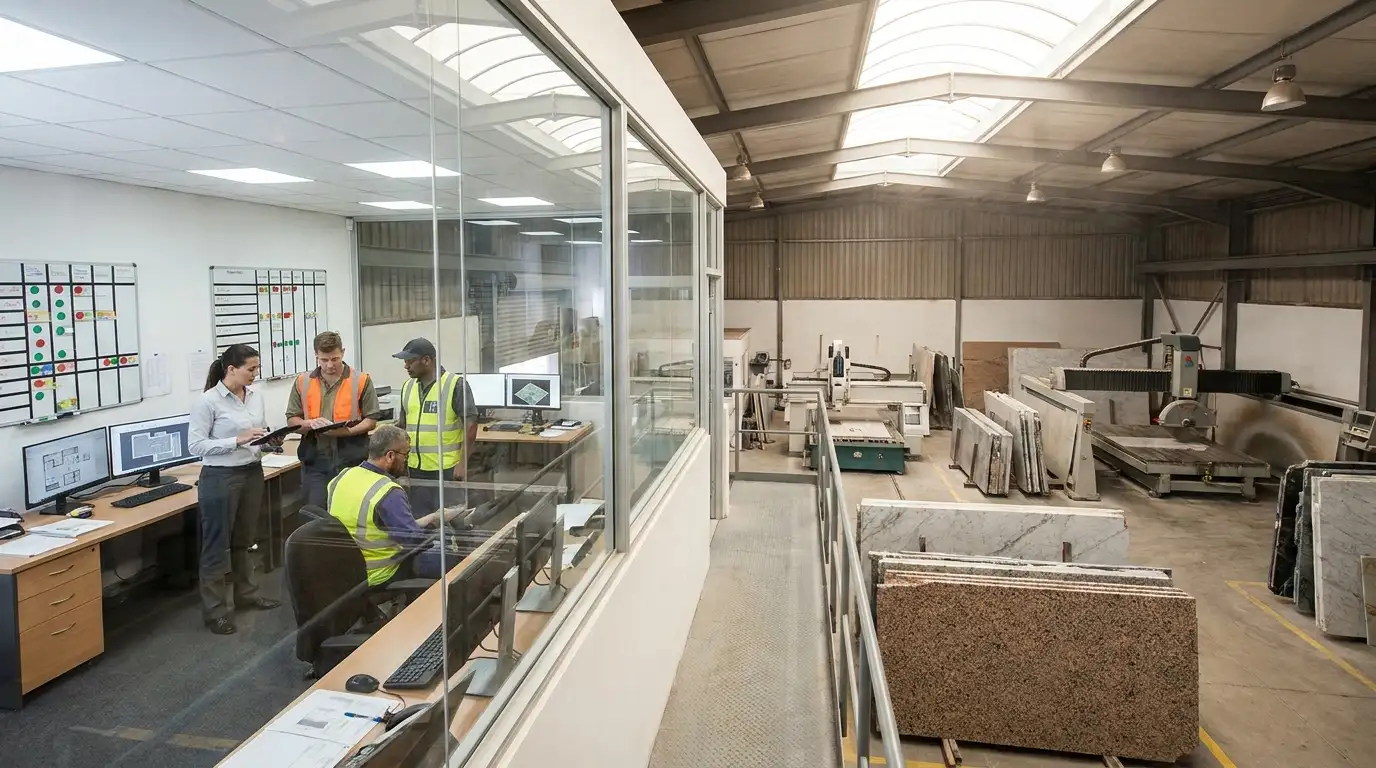
Measure the gains that actually affect Fabrication CRM ROI
If the goal is to get the best ROI, it helps to measure the results that actually move margin. Plenty of shops focus mostly on lead volume or closed sales. Those matter, of course. But in fabrication, they usually only show part of the picture.
A better scorecard follows the full job lifecycle. That means tracking quote turnaround time, watching how many jobs need extra clarification after templating, and noting schedule changes caused by missing information. It also helps to watch install revisits and invoice lag after completion. This is usually where software saves money, because little delays, missed details, and doing the same work twice can pile up quickly.
Track operational delays before they grow
A connected system can also cut hidden admin work. If customer and supplier emails are linked to the right job instead of sitting in personal inboxes, the office team spends less time hunting things down, and fewer details get missed. It sounds minor, but it can make a noticeable difference. If templaters and fitters can pull up live job notes on mobile, they usually don’t need to call the office as often. And if everyone’s working from one shared calendar, it’s much easier to spot clashes before they become delays, and that happens more than a lot of teams realise.
Broad CRM research points the same way. In HubSpot’s 2025 survey of 1,546 CRM users, 30% said they saw ROI within 6 months, and 63% said they saw ROI within 12 months. It isn’t specific to fabrication, so it’s better used as a rough guide than a promise. Even so, it suggests teams that use CRM well often start seeing returns pretty quickly.
The most useful comparison is simply what changed before and after. If quote turnaround drops from three days to one, revisits go down, and invoicing happens faster, it becomes much easier to see the ROI. In most cases, that’s the clearest way to show whether the system is actually helping.
The biggest ROI often comes after the sale
A lot of shops trip up here. They treat CRM mainly as a sales tool and then end up asking why the return seems so limited. In stone fabrication, much of the real value often shows up after the customer has already said yes, which is easy to miss when most of the focus stays on the pipeline.
The hard part isn’t just winning the job. What often makes the difference is getting everything delivered smoothly. A Fabrication CRM becomes much more useful when it works as an operational hub for templating, fabrication, scheduling, installation, and follow-up. That’s often where the day-to-day gains start to show, not only in sales reports.
Why field access improves profitability
The wider construction and service sectors help show why this matters. HSB reported that more than 73% of UK construction businesses used BIM in 2025, up from 62% in 2017, and that 97% of construction professionals expected company investment in digital technologies to increase. Separate field-service research from Geotab found that 85% of organizations were using mobile apps with real-time data access. It also found that 88% reported uptime gains of 6% to 15%, while 75% improved first-time-fix rates by 11% to 30%, which is a strong signal.
| Operational metric | Figure | Period |
|---|---|---|
| UK construction businesses using BIM | 73%+ | 2025 |
| Construction professionals expecting more digital investment | 97% | reported in 2025 |
| Field-service organizations using mobile apps with real-time data | 85% | 2025 |
| Organizations reporting uptime gains | 88% | 2025 |
| Organizations improving first-time-fix rates | 75% | 2025 |
For a worktop company, the takeaway is pretty clear. If fitters and templaters are part of the workflow, they’re part of the ROI too. Better field access usually means fewer avoidable visits and smoother installation days, with less chaos during handoffs. It can also help reduce site surprises, often because teams can see the right job details while they are on site.
Manufacturing is undergoing a defining transformation. Service has evolved from a support function into a core profit engine, with 94% of manufacturers reporting that new service models are already impacting operations.
That quote is broader than stone fabrication, but the point still works here. Service and delivery aren’t just back-office details anymore. They’re often where profit gets protected, especially during scheduling, handoff, and installation, when mistakes tend to get expensive.
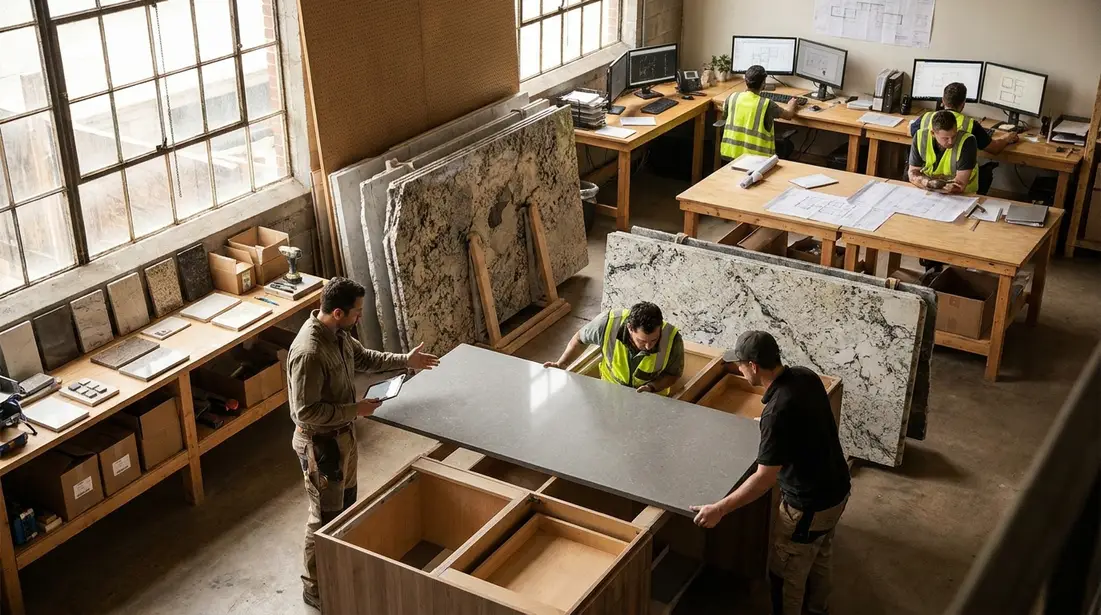
Common mistakes that kill Fabrication CRM ROI
A common mistake is treating setup as just an IT task instead of something operations needs to own. If the stages, job fields, and handoffs don’t line up with how the shop actually runs day to day, people tend to work around the system. And that happens fast.
Another issue is only digitizing the front end. A tidy enquiry screen doesn’t do much for returns if template details and install updates are still buried in emails, spreadsheets, or someone’s notes, and fabrication status is being tracked somewhere else as well. When things are split up like that, delays and mix-ups are common, especially once jobs start moving quickly.
Another common issue is poor data discipline. A lot of businesses get excited about automation and AI, but the basics still count. HubSpot’s 2025 research found 88% of SMBs reported AI implementation, yet only 13% said they had the data infrastructure needed to use AI effectively. That gap says a lot. Fancy features can’t fix messy job data, and they often just make the mess harder to see.
Consistent workflows matter more than features
Poor mobile adoption creates trouble too. Office staff might use the system, but field teams often still rely on phone calls and screenshots. That’s usually when the workflow falls apart on-site or during install visits, and that’s also where costly mistakes tend to happen.
Some shops also stop reviewing results after launch. They buy the system, do the training once, and then that’s it. ROI usually gets better when managers keep adjusting templates, required fields, scheduling habits, and job-stage rules over time instead of only in week one. That’s what makes the system more useful in day-to-day work, because it solves the things that slow jobs down.
A practical plan to improve return in the first 90 days
You don’t need some huge transformation project before you start getting value. A lot of the time, it’s actually better to start small. Start with the problems that hurt most, not a long list of vague improvements.
A practical first step is to map how the work really moves, from enquiry through to the final invoice. Note where information gets copied, delayed, lost, or missed. After that, choose four measurable targets. Good ones to track are quote speed, install revisit rate, the number of days from completion to invoice, and how often teams need to chase updates. It’s better to keep this close to the day-to-day work rather than broad goals. Then standardize the job record so every live job has one place for customer notes, drawings, emails, schedule dates, and site updates.
Field teams should also be included early. Templaters and fitters need the latest job information without having to call the office, and that often saves more time than people expect. A shared schedule view helps too, because clashes, remakes, and overload usually become visible sooner.
Platforms like CutBench are built around this kind of connected workflow for stone and worktop businesses. That is why the ROI discussion is really about coordination, not just contact storage. In most cases, the goal is to have one system covering quoting, templating, fabrication, installs, stock, invoicing, and team communication, so it’s easier to see what’s happening without chasing people.
Turn your CRM into a daily profit tool
A Fabrication CRM tends to pay off less because of software hype and more because it helps the business stay in control day to day. You usually see the best results when it cuts admin, makes handoffs quicker, improves visibility in the field, and gives the whole team one shared job record they can actually work from, which matters more than many expect.
If the business is still running on spreadsheets, paper packs, wall planners, and scattered messages, the upside is probably bigger than it first looks. As fabrication businesses get more complex, the market keeps moving toward connected systems, so growing adoption isn’t hard to understand. That can be a clear sign for shops that want to grow without losing control of jobs.
Where is margin leaking right now? Maybe it’s slow quotes, lost notes, schedule clashes, install revisits, or late invoicing. A practical way to begin is to start there, then use the Fabrication CRM to sort out those specific issues first rather than trying to change everything in one go.
If the system matches how the team already works, people are far more likely to use it, and the data stays cleaner. That’s when the return becomes much easier to spot. CutBench and other fabrication-focused tools usually work best when they support the real job from first enquiry through to final payment, not just the sales side. And for better ROI, it helps to ask more than, “Does this CRM track customers?” Think about whether it helps each job move faster, more smoothly, and with fewer mistakes.
For shops that want to get out of reactive firefighting and into steadier control, a dedicated stone fabrication workflow platform can be one of the most practical investments in the business.