

The Future of Fabrication CRM in 2026
Discover how fabrication CRM will evolve in 2026 from a sales tool into the operational hub for stone shops. Learn how connected workflows, mobile access, and practical AI can cut admin, reduce mistakes, speed installs, and improve cash flow.
If you run a stone or worktop business, you already know the hard part isn’t just getting more enquiries. The bigger challenge in fabrication CRM is keeping each job on track without missed details, messy handoffs, or office chaos. One customer wants an update, the fitter needs the latest notes, the templater needs the right site details, and the office still has to check whether the deposit was paid. If that information is scattered across spreadsheets, paper packs, inboxes, and chat threads, things tend to slow down quickly, and that happens a lot.
That is why the future of Fabrication CRM is about more than sales tracking. For small and mid-sized fabricators, especially in the UK, it’s becoming the main system for the whole job. It’s not only about sales; it’s the day-to-day workflow teams usually need. It pulls together leads and follow-ups and also connects quoting, scheduling, templating, fabrication, installation, and payment steps so everything works in one place.
This article looks at where Fabrication CRM is heading, which trends matter for stone shops, where AI will help, and where it won’t. It also covers what owners and teams should really be looking for next. The goal is simple: to help explain what a future-ready system should do in the real world of quartz, granite, marble, and kitchen worktop jobs. That’s really the focus here: simple, practical things teams can actually use.
Fabrication CRM is becoming an operations hub
A few years ago, many businesses saw CRM mostly as a place to store contacts, track sales stages, and set reminders. That still matters, of course, but in fabrication it often doesn’t go far enough. Stone businesses don’t stop once a quote is accepted. In reality, that is often where the real work starts, and where things can begin to get messy.
The wider market is moving in the same direction. In the UK Department for Business and Trade’s 2025 survey, 74% of SME employers said they were using technology or web-based software to sell to customers or manage the business. In construction, that figure was 61%. Still behind, which probably won’t surprise many people in the trade.
| Measure | 2023 | 2024 | 2025 |
|---|---|---|---|
| UK SME employers using technology or web-based software to sell or manage | 61% | 69% | 74% |
| UK SME employers using software specifically to manage the business | 54% | 65% | 70% |
| Construction-sector use of technology or web-based software | - | - | 61% |
That gap matters. Many fabrication firms still depend on disconnected tools. And the shops that modernise can often stand out much faster, especially when others are still trying to manage spreadsheets, emails, and separate job notes all at once.
For a stone fabricator, the future Fabrication CRM isn’t just a database. It’s the place where an enquiry becomes a quote, then turns into a live job. From there, the same job moves through templating, scheduling, cutting, fitting, sign-off, and invoicing. If a system can’t support that full process, it may still be called a CRM, but it probably isn’t doing enough for day-to-day operations.
That also helps explain why generic platforms can seem good at first and then become frustrating later. They may handle lead logging perfectly well. What usually gets harder is keeping slab details, measurements, fabrication stages, and install coordination together in one workflow. That is the part that needs to run smoothly when templating is booked, production is underway, and fitting dates are being confirmed.
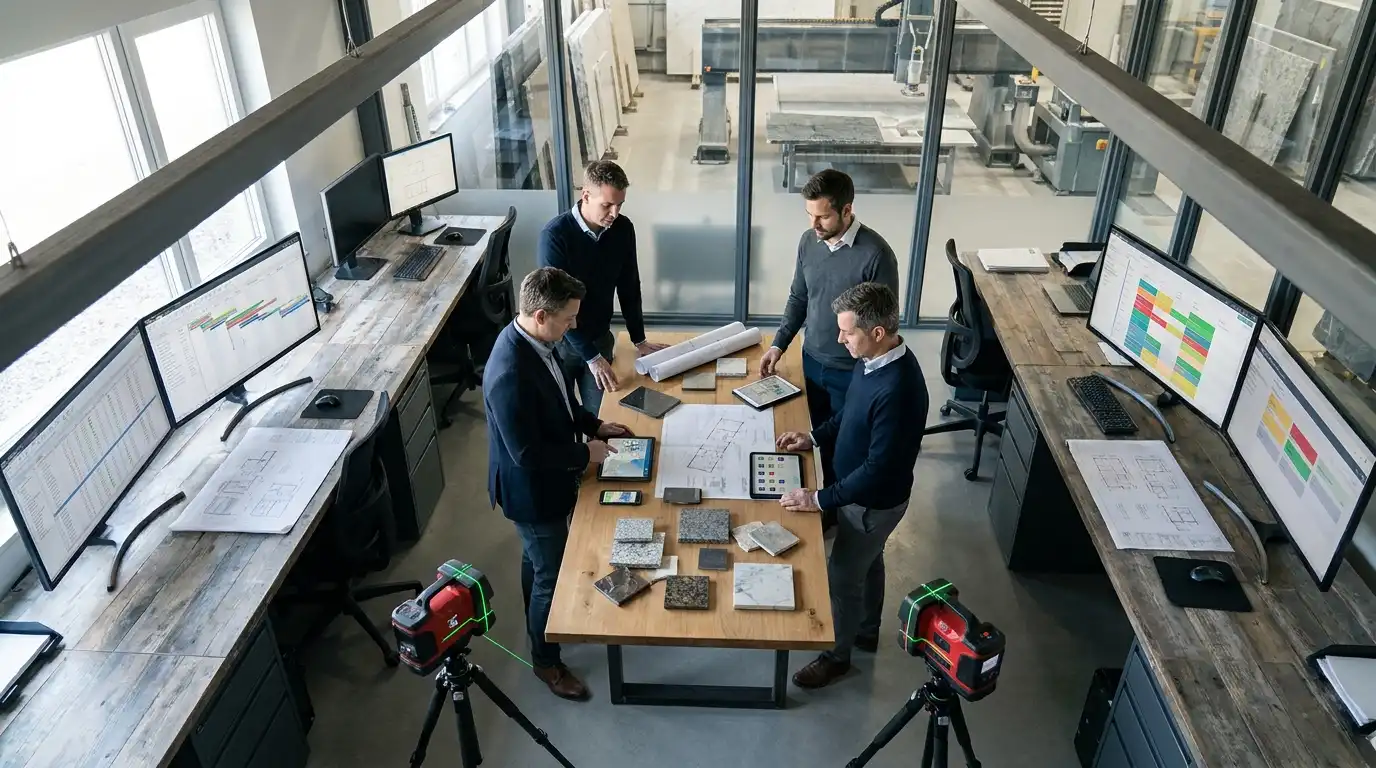
The winning systems will connect data, not add more apps
Most shops probably don’t need more software. What they usually need is fewer gaps, and fewer workarounds.
Recent service and operations research points to something pretty clear: connected data usually works better than data stuck in silos. Salesforce research found that organisations bringing customer-service channel data together were 1.4 times more likely to say their AI efforts were very successful. The same research also showed that 88% of service leaders were prioritising integration, so data sits in one place instead of being spread across separate systems.
For fabrication businesses, that’s more of a practical issue than a technical one. The office shouldn’t have to rely on one tool for leads, another for quotes, another for scheduling, and then somebody else’s notebook for site notes, even though that happens more often than people expect. Each gap adds risk. The gaps may look small, but they often become expensive.
Common pain points from disconnected systems can seem minor on their own:
- a fitter turns up with old sink cutout notes
- the office promises a date that production can’t hit
- a customer asks for an update and nobody knows the real job stage
- templating details never make it cleanly into fabrication prep
- an invoice waits because sign-off is stuck in messages
Taken together, those small misses can quietly eat into margin.
The future of Fabrication CRM is a single shared view of the job. Owners need to see sales, scheduling, and job progress in one place. Operations teams need smoother handoffs, and sales staff need to know what can actually be delivered. Field teams need live information instead of yesterday’s printout. That is why platforms like CutBench fit into the wider move toward role-based workflow systems built around how fabrication businesses actually work, not how generic software assumes they should.
Unified data also helps customer experience. If someone calls to ask, ‘Has my template been booked?’ or ‘Are we still on for Thursday?’, the office should be able to answer in seconds, not after chasing three different systems or walking around the workshop to get an update.
AI will matter most in fabrication CRM when it removes admin
There’s a lot of noise around AI. Some of it’s useful. Some of it is mostly branding, and you can usually tell the difference.
For stone shops, the future probably won’t be flashy robot features. It’s more likely to appear in quieter tools that save time each day, in small ways that can add up. That’s the direction Fabrication CRM seems to be heading, from this point of view.
The research points the same way. In Salesforce’s 2025 service reporting, 30% of customer-service cases were estimated to be handled by AI, and professionals expected that number to reach 50% by 2027. It also found that 80% of technicians wanted to spend less time on admin, which is a pretty clear sign. Another 87% said AI could make their jobs more satisfying, which usually happens when repetitive work gets reduced. Service organisations also expected AI to cut service costs and resolution times by an average of 20%.
| AI and service metric | Value | Period |
|---|---|---|
| Cases estimated to be handled by AI | 30% | 2025 |
| Expected AI-handled cases | 50% | 2027 projection |
| Technicians wanting less admin time | 80% | 2025 |
| Technicians saying AI could improve job satisfaction | 87% | 2025 |
| Expected reduction in service costs and case-resolution times | 20% | 2025 expectation |
So in fabrication, that could mean:
Smarter follow-up
The system drafts reminder emails for older quotes, and also nudges the sales team when a customer goes quiet, which usually helps. Simple and helpful.
Better call and message summaries
No more searching through notes, which is nice. You’ll usually get a clear summary of what changed on the job, and the office gets it too.
Faster status handling
AI can help sort incoming questions. It can guide your team to the right record, which often helps, then show the next step. Simple and useful.
Cleaner admin after site work
Templaters and fitters can record updates once, and the system helps keep everything organised for the office team, which likely cuts down a lot of back-and-forth.
The warning here is pretty clear. AI usually helps when the workflow underneath is already connected. In its 2025-2026 review of Salesforce customers, IBM reported that only 33% of AI initiatives were hitting ROI targets, while 72% hadn’t scaled across business units. That’s not a great result. So the future isn’t really “buy AI first.” It’s more like fixing the process, connecting the data, then adding AI where it saves real time, for example in everyday admin.
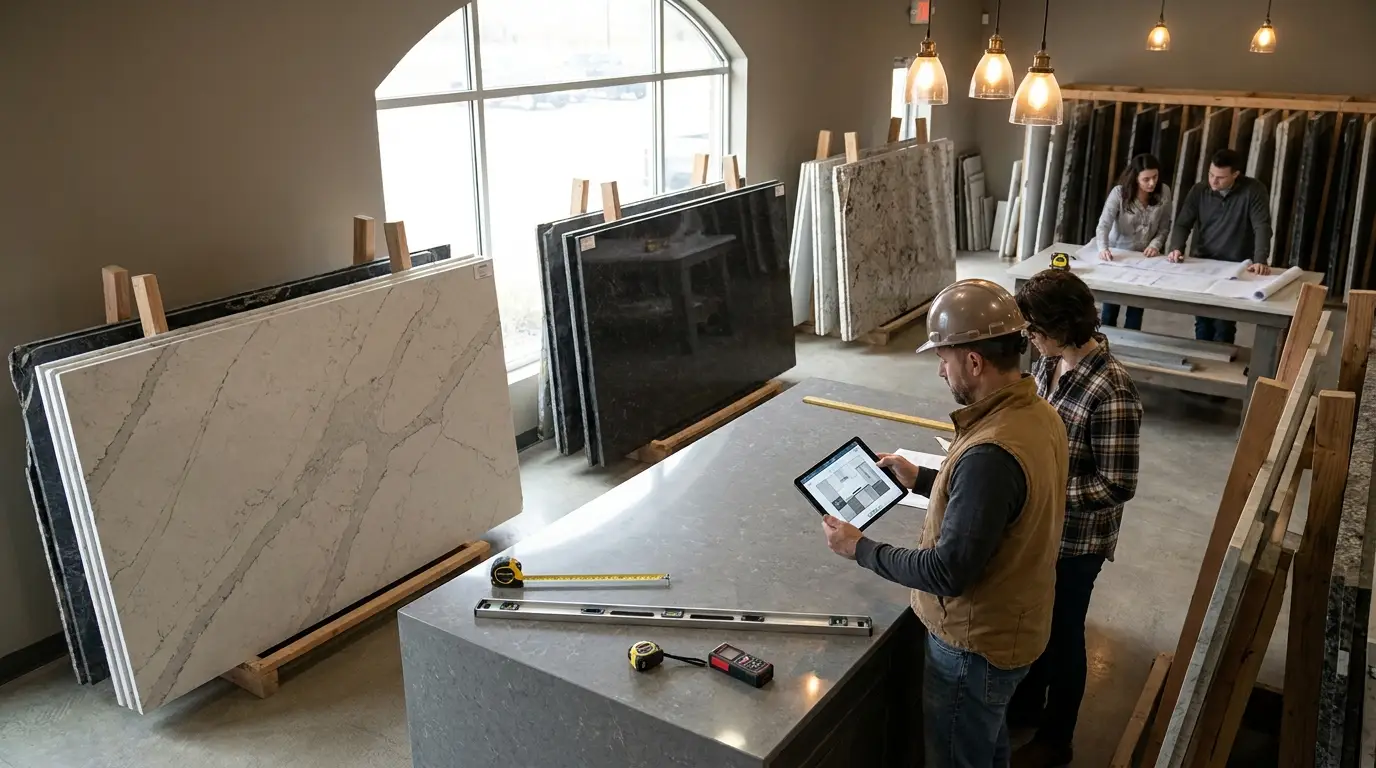
Mobile access will stop being optional for field teams
One of the biggest shifts in Fabrication CRM is simply where the work happens now. It’s no longer tied to the office, which is probably obvious by this point.
Templaters, fitters, survey staff, and installers need live access to job details while they’re on site. That includes addresses, drawings, edge details, material notes, customer phone numbers, access issues, appliance details, and sign-off steps. When even one of those details is out of date, mistakes can happen fast, and they often do.
That matters even more for small and mid-sized worktop businesses. Miss one note and you can end up with a remake, a wasted trip, or an install that gets pushed back. A future-ready system gives field teams one up-to-date job record, instead of leaving them to piece things together from screenshots, old messages, and phone calls. And that can make a real difference.
It also changes how office teams work. Instead of spending the day chasing updates, they can see progress as it happens. A site measure may be completed, or an install might be delayed because access isn’t available at the property. Then a customer signature is captured, a snag is logged, and the balance is ready to invoice, which usually saves time for everyone.
So the result isn’t just about speed. I think it often gives people more confidence too. There’s less guessing, customers get clearer answers, and managers get a more accurate view of capacity and scheduling.
The best Fabrication CRM should fit real fabrication workflows
This is where a lot of software options miss the mark. A platform can look polished in a demo, and probably impressive too, while still being the wrong fit for a stone shop.
The future of Fabrication CRM is likely industry-specific. But that does not mean every business needs the exact same setup. It usually means the software should understand the full job process for fabrication and installation, from quote to install in most cases.
So the useful thing is noticing signs that it’s actually a better fit for the shop.
Quote to job handoff without retyping
When a quote is won, the team shouldn’t have to rebuild the job from scratch, which is usually frustrating. No retyping, so they likely save time.
Templating and install steps built into the workflow
They aren’t tucked away in custom fields, which honestly helps. They’re handled right in the system, so you can usually find them there.
Clear stage visibility for office and workshop teams
Everyone should see what’s waiting, what’s in progress, and what’s blocked, clearly. It stays simple and easy for office and workshop teams to use.
Linked commercial and operational data
Deposit status, schedule status, and job progress should support each other, as they usually do. Keep them matching, so things don’t get mixed up.
Fast answers for customers
When a client rings, the office needs to see the same current information as the field team, usually the latest job details.
That’s why the migration decision matters so much. Many fabricators moving away from spreadsheets or basic job tools often get better results by fixing the biggest pain point first. For some businesses, that’s quoting. Others struggle more with scheduling, job tracking, invoicing delays, or payment issues. In fabrication software projects, one thing comes up again and again: payment problems usually begin much earlier in the workflow. If a job isn’t connected properly, the invoice often ends up going out late, and that frustrates everyone.
If the goal is to store contacts and create smoother handoffs from enquiry to final fit, a specialist platform such as stone fabrication workflow software probably makes more sense.
What owners should do next to stay ahead
The future of Fabrication CRM isn’t really about chasing every new trend. Most of the time, it comes down to choosing a few changes that take friction out of the business, because that’s what tends to make the biggest difference in everyday work.
A quick review is usually the best place to begin.
- Start by mapping the whole job journey, from the first enquiry to the final payment.
- Note every step where data is retyped, chased, printed, or checked by hand.
- Ask each team where time slips away and where they stop trusting the current system.
- In many cases, a shared platform works best when office staff and field teams are looking at the same live view of each job, from quoting and scheduling all the way to install status.
- Leave AI until the workflow is clean, and treat it as a helper rather than the starting point.
It’s also worth watching adoption barriers, because those issues are real. In the UK technology adoption survey published in 2025, businesses highlighted government regulation at 19%, data privacy and security concerns at 17%, and integration difficulty at 16% as major barriers. For smaller firms especially, those concerns can have a real effect on what’s practical. That is why, in many cases, buying for simplicity and fit makes more sense than adding features that probably won’t get used.
Construction has fallen behind wider digital adoption, and that leaves room for smarter operators to move first. If a shop can quote faster, coordinate jobs better, answer customers more clearly, and send invoices with less friction, it’s not just getting more organised. It’s also making the business stronger in a very practical way.
The shops that tend to do best with Fabrication CRM are usually the ones making daily work easier for owners, office teams, templaters, fitters, and sales staff. In real terms, that means less chasing, fewer surprises, and more control from quote to install.